Services
January 18, 2026
Amazon PPC Bidding Strategies: What They Are and When to Use Each One
Services
January 18, 2026
Amazon PPC Bidding Strategies: What They Are and When to Use Each One
Amazon PPC Bidding Strategies: What They Are and When to Use Each One
One of the most underestimated decisions in Amazon PPC isn’t keywords, budgets, or even campaign structure.
It’s bidding strategy selection.
Amazon offers three bidding strategies, and while they look simple on the surface, choosing the wrong one for the wrong context can quietly limit performance — or destroy profitability.
This article breaks down:
What each bidding strategy actually does
When each one makes sense
And why there is no “default” or “best” option
The 3 Amazon PPC Bidding Strategies Explained
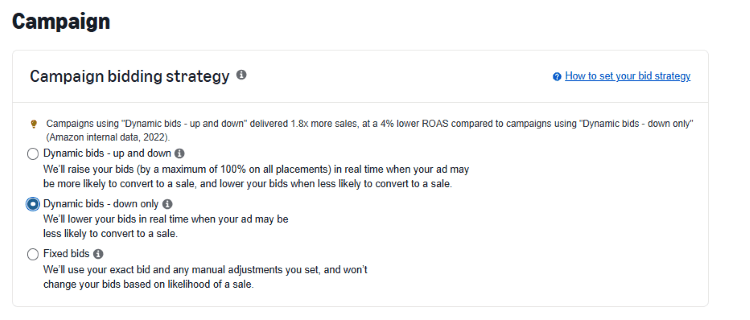
Amazon Sponsored Products campaigns offer three bidding strategies:
Dynamic bids — Down only
Dynamic bids — Up and down
Fixed bids
Each one signals a different level of intent, risk tolerance, and objective to Amazon’s algorithm.
1. Dynamic Bids — Up and Down
With Dynamic bids — Up and down, Amazon can both increase or decrease your bids in real time, based on its prediction of conversion likelihood.
Amazon may raise bids by up to:
100% for top-of-search placements
50% for other placements
When to Use Up and Down
This strategy makes sense when growth and visibility are the main objective.
Typical scenarios include:
High-converting keywords
Competitive categories
Scaling phases
Situations where winning impressions matters more than short-term ACOS
Strategic Insight
This is an offensive strategy.
You’re telling Amazon:
“If you see a high-quality opportunity, take it.”
Up and down bidding allows Amazon to push harder when the probability of sale is high — but it also requires confidence in your listing, pricing, and conversion rate.
2. Dynamic Bids — Down Only
With Dynamic bids — Down only, Amazon will lower your bid in real time when it predicts a lower probability of conversion.
It will never increase your bid beyond what you set.
When to Use Down Only
This strategy is ideal when control and efficiency are the priority.
Common use cases include:
Branded keyword campaigns
Mature products with stable conversion history
Defensive campaigns protecting existing rankings
Situations where profitability matters more than scale
Strategic Insight
This is a defensive bidding strategy.
You’re telling Amazon:
“Spend when it makes sense, but protect margin.”
Down only prioritizes cost control over aggressive visibility.
3. Fixed Bids
With Fixed bids, Amazon uses exactly the bid you set, with no real-time adjustments.
When to Use Fixed Bids
Fixed bids are best used when learning and control matter more than automation.
Ideal use cases include:
New product launches
Testing new keywords or search terms
Highly controlled experiments
Situations with limited or unreliable data
Strategic Insight
Fixed bids are not about scaling — they’re about understanding.
They allow you to:
Observe true CPC behavior
Control volatility
Gather clean performance data
This strategy is often temporary, not permanent.
The Most Important Insight: There Is No “Best” Bidding Strategy
The biggest mistake Amazon sellers make is choosing a bidding strategy by habit, recommendation, or default settings.
There is no universal best option.
The right bidding strategy depends on:
Your product lifecycle stage
Your campaign objective (defense, growth, testing)
Your category competitiveness
Your tolerance for volatility
Amazon doesn’t reward settings.
It rewards decisions made with context.
Final Thoughts
Bidding strategies are not tactical checkboxes.
They are strategic signals.
Before selecting one, ask:
What is this campaign trying to achieve?
What risk am I willing to take?
What data do I trust right now?
When bidding strategies align with intent, PPC becomes predictable.
When they don’t, performance becomes chaotic.
At Chrizon Agency, bidding strategy is never chosen in isolation — it’s chosen as part of a broader decision-making framework designed to improve long-term results, not just short-term metrics.
Amazon PPC Bidding Strategies: What They Are and When to Use Each One
One of the most underestimated decisions in Amazon PPC isn’t keywords, budgets, or even campaign structure.
It’s bidding strategy selection.
Amazon offers three bidding strategies, and while they look simple on the surface, choosing the wrong one for the wrong context can quietly limit performance — or destroy profitability.
This article breaks down:
What each bidding strategy actually does
When each one makes sense
And why there is no “default” or “best” option
The 3 Amazon PPC Bidding Strategies Explained
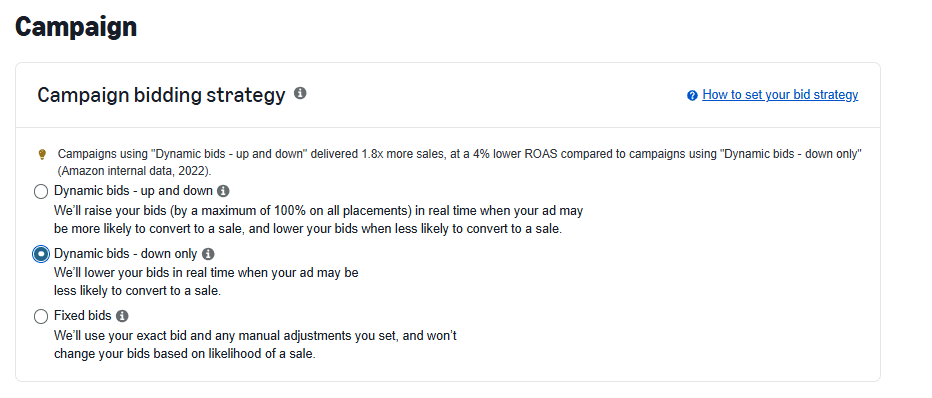
Amazon Sponsored Products campaigns offer three bidding strategies:
Dynamic bids — Down only
Dynamic bids — Up and down
Fixed bids
Each one signals a different level of intent, risk tolerance, and objective to Amazon’s algorithm.
1. Dynamic Bids — Up and Down
With Dynamic bids — Up and down, Amazon can both increase or decrease your bids in real time, based on its prediction of conversion likelihood.
Amazon may raise bids by up to:
100% for top-of-search placements
50% for other placements
When to Use Up and Down
This strategy makes sense when growth and visibility are the main objective.
Typical scenarios include:
High-converting keywords
Competitive categories
Scaling phases
Situations where winning impressions matters more than short-term ACOS
Strategic Insight
This is an offensive strategy.
You’re telling Amazon:
“If you see a high-quality opportunity, take it.”
Up and down bidding allows Amazon to push harder when the probability of sale is high — but it also requires confidence in your listing, pricing, and conversion rate.
2. Dynamic Bids — Down Only
With Dynamic bids — Down only, Amazon will lower your bid in real time when it predicts a lower probability of conversion.
It will never increase your bid beyond what you set.
When to Use Down Only
This strategy is ideal when control and efficiency are the priority.
Common use cases include:
Branded keyword campaigns
Mature products with stable conversion history
Defensive campaigns protecting existing rankings
Situations where profitability matters more than scale
Strategic Insight
This is a defensive bidding strategy.
You’re telling Amazon:
“Spend when it makes sense, but protect margin.”
Down only prioritizes cost control over aggressive visibility.
3. Fixed Bids
With Fixed bids, Amazon uses exactly the bid you set, with no real-time adjustments.
When to Use Fixed Bids
Fixed bids are best used when learning and control matter more than automation.
Ideal use cases include:
New product launches
Testing new keywords or search terms
Highly controlled experiments
Situations with limited or unreliable data
Strategic Insight
Fixed bids are not about scaling — they’re about understanding.
They allow you to:
Observe true CPC behavior
Control volatility
Gather clean performance data
This strategy is often temporary, not permanent.
The Most Important Insight: There Is No “Best” Bidding Strategy
The biggest mistake Amazon sellers make is choosing a bidding strategy by habit, recommendation, or default settings.
There is no universal best option.
The right bidding strategy depends on:
Your product lifecycle stage
Your campaign objective (defense, growth, testing)
Your category competitiveness
Your tolerance for volatility
Amazon doesn’t reward settings.
It rewards decisions made with context.
Final Thoughts
Bidding strategies are not tactical checkboxes.
They are strategic signals.
Before selecting one, ask:
What is this campaign trying to achieve?
What risk am I willing to take?
What data do I trust right now?
When bidding strategies align with intent, PPC becomes predictable.
When they don’t, performance becomes chaotic.
At Chrizon Agency, bidding strategy is never chosen in isolation — it’s chosen as part of a broader decision-making framework designed to improve long-term results, not just short-term metrics.
Blogs
Other Blogs
Check out our blogs for useful information for your Amazon business
Blogs
Other Blogs
Check out our blogs for useful information for your Amazon business