Services
February 12, 2026
Why Your Amazon Growth Problem Might Be Positioning, Not Traffic
Services
February 12, 2026
Why Your Amazon Growth Problem Might Be Positioning, Not Traffic
Why Your Amazon Growth Problem Might Be Positioning, Not Traffic
Most Amazon sellers assume that when sales slow down, the solution is simple: drive more traffic.
More keywords.
Higher bids.
Larger budgets.
But in many cases, traffic isn’t the real constraint.
Positioning is.
At Chrizon Agency, we consistently see accounts where advertising isn’t the core issue. The real problem is that the product is positioned as interchangeable — just another option in a sea of similar listings.
And when that happens, PPC turns into a price war.
The Traffic Illusion
It’s easy to believe that growth is a visibility problem.
If impressions are low, increase bids.
If clicks are low, expand targeting.
If sales are flat, scale spend.
But here’s the uncomfortable truth:
If your product looks like every other product on the page, more traffic simply exposes that weakness faster.
Advertising amplifies what already exists.
It does not fix positioning.
What Positioning Really Means on Amazon
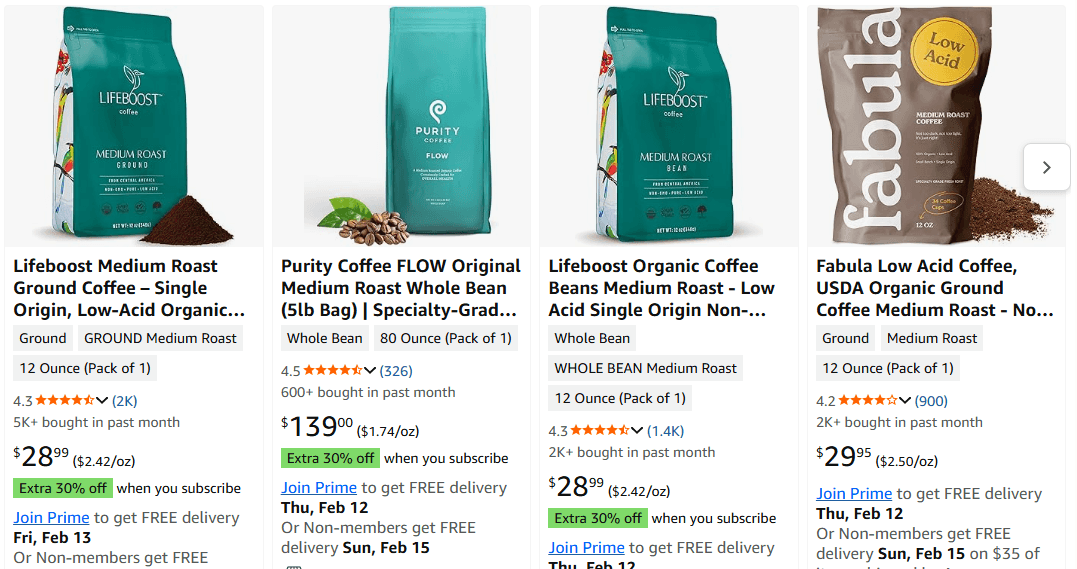
Positioning on Amazon isn’t about branding theory. It’s about clarity and differentiation within seconds.
In a search results page full of near-identical offers, your product has less than one second to communicate:
Why this product exists
Who it is for
Why it is better (or different)
Why it is worth the price
If that isn’t immediately obvious, shoppers default to:
Lower price
Higher review count
Familiar brand
That’s when margin erosion begins.
The Real Drivers of Strong Positioning
Strong positioning on Amazon is built on structural elements, not slogans.
1. Visual Dominance on the SERP
Your main image is not decorative.
It is a conversion filter.
Does it:
Stand out instantly?
Highlight the core benefit visually?
Communicate size, quantity, or use case clearly?
If your image blends in, your CPC will rise over time because you’ll need to "buy" attention.
2. Clear Use Case
Many listings describe features but fail to define context.
Shoppers don’t just buy products. They buy solutions for specific situations.
The more clearly your listing communicates the exact use case, the less you compete on price.
3. Perceived Value vs. Actual Price
Two products can have the same price but different perceived value.
Perceived value is influenced by:
Image quality
Offer structure (bundles, coupons, quantity)
Review distribution and velocity
Brand presentation
If perceived value is weak, ads will struggle to scale efficiently.
4. Review Velocity and Trust Signals
It’s not just about star rating.
Velocity, recency, and volume influence buying confidence.
Without strong trust signals, aggressive PPC creates unstable growth.
Why PPC Becomes a Price War Without Positioning
When positioning is unclear, shoppers compare only two things:
Price
Reviews
If you are not clearly differentiated, you are forced into competing on one of those two variables.
And both compress margins.
This is where many sellers misdiagnose the issue as a "PPC efficiency problem" when the root cause is strategic.
The Right Question Before Scaling Ads
Before increasing ad spend, ask:
Does my main image win the click within one second?
Is my value proposition obvious without reading the entire listing?
Am I competing on price, or on positioning?
Would a customer understand who this product is for immediately?
If those answers are unclear, scaling ads will magnify inefficiency rather than drive growth.
How Chrizon Agency Approaches Growth
At Chrizon Agency, we don’t separate traffic from positioning.
Before scaling budgets, we evaluate:
Listing strength
Offer clarity
Conversion consistency
Competitive differentiation
Because traffic is rented.
Positioning is owned.
And long-term Amazon growth belongs to brands that control their positioning first — then amplify it with advertising.
Final Thought
If your Amazon growth has plateaued, don’t immediately assume you need more traffic.
You may need stronger positioning.
Once positioning is clear, traffic becomes leverage.
Until then, it’s just exposure.
If you want to evaluate whether your brand is positioned to scale — not just advertise — Chrizon Agency can help you analyze the structural foundations behind your growth.
Why Your Amazon Growth Problem Might Be Positioning, Not Traffic
Most Amazon sellers assume that when sales slow down, the solution is simple: drive more traffic.
More keywords.
Higher bids.
Larger budgets.
But in many cases, traffic isn’t the real constraint.
Positioning is.
At Chrizon Agency, we consistently see accounts where advertising isn’t the core issue. The real problem is that the product is positioned as interchangeable — just another option in a sea of similar listings.
And when that happens, PPC turns into a price war.
The Traffic Illusion
It’s easy to believe that growth is a visibility problem.
If impressions are low, increase bids.
If clicks are low, expand targeting.
If sales are flat, scale spend.
But here’s the uncomfortable truth:
If your product looks like every other product on the page, more traffic simply exposes that weakness faster.
Advertising amplifies what already exists.
It does not fix positioning.
What Positioning Really Means on Amazon
Positioning on Amazon isn’t about branding theory. It’s about clarity and differentiation within seconds.
In a search results page full of near-identical offers, your product has less than one second to communicate:
Why this product exists
Who it is for
Why it is better (or different)
Why it is worth the price
If that isn’t immediately obvious, shoppers default to:
Lower price
Higher review count
Familiar brand
That’s when margin erosion begins.
The Real Drivers of Strong Positioning
Strong positioning on Amazon is built on structural elements, not slogans.
1. Visual Dominance on the SERP
Your main image is not decorative.
It is a conversion filter.
Does it:
Stand out instantly?
Highlight the core benefit visually?
Communicate size, quantity, or use case clearly?
If your image blends in, your CPC will rise over time because you’ll need to "buy" attention.
2. Clear Use Case
Many listings describe features but fail to define context.
Shoppers don’t just buy products. They buy solutions for specific situations.
The more clearly your listing communicates the exact use case, the less you compete on price.
3. Perceived Value vs. Actual Price
Two products can have the same price but different perceived value.
Perceived value is influenced by:
Image quality
Offer structure (bundles, coupons, quantity)
Review distribution and velocity
Brand presentation
If perceived value is weak, ads will struggle to scale efficiently.
4. Review Velocity and Trust Signals
It’s not just about star rating.
Velocity, recency, and volume influence buying confidence.
Without strong trust signals, aggressive PPC creates unstable growth.
Why PPC Becomes a Price War Without Positioning
When positioning is unclear, shoppers compare only two things:
Price
Reviews
If you are not clearly differentiated, you are forced into competing on one of those two variables.
And both compress margins.
This is where many sellers misdiagnose the issue as a "PPC efficiency problem" when the root cause is strategic.
The Right Question Before Scaling Ads
Before increasing ad spend, ask:
Does my main image win the click within one second?
Is my value proposition obvious without reading the entire listing?
Am I competing on price, or on positioning?
Would a customer understand who this product is for immediately?
If those answers are unclear, scaling ads will magnify inefficiency rather than drive growth.
How Chrizon Agency Approaches Growth
At Chrizon Agency, we don’t separate traffic from positioning.
Before scaling budgets, we evaluate:
Listing strength
Offer clarity
Conversion consistency
Competitive differentiation
Because traffic is rented.
Positioning is owned.
And long-term Amazon growth belongs to brands that control their positioning first — then amplify it with advertising.
Final Thought
If your Amazon growth has plateaued, don’t immediately assume you need more traffic.
You may need stronger positioning.
Once positioning is clear, traffic becomes leverage.
Until then, it’s just exposure.
If you want to evaluate whether your brand is positioned to scale — not just advertise — Chrizon Agency can help you analyze the structural foundations behind your growth.
Blogs
Other Blogs
Check out our blogs for useful information for your Amazon business
Blogs
Other Blogs
Check out our blogs for useful information for your Amazon business